
An employee handbook should explain all of a company’s policies, procedures, and expectations. It’s an important part of establishing clear guidelines and cultivating a positive work environment. One of the first tasks for a new hire is to look over the employee handbook, because it will set the tone for the employee.
It will also allow the employer to outline his or her expectations while providing a framework for proper communication and conflict resolution. They’re not considered to be “legal documents,” but employers will often have a new hire sign a document stating that he or she has read an employee handbook and understands its contents. Because it’s such an important resource, a company needs to know what to include in an employee handbook.
The Benefits of a Good Employee Handbook
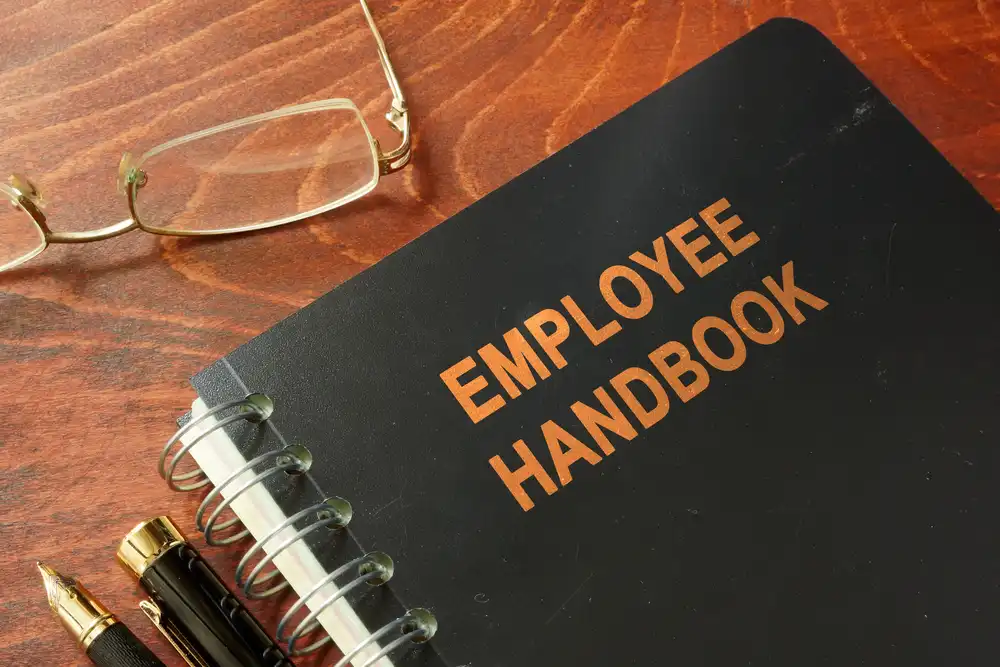
An employee handbook is a document that clearly outlines a company’s policies and procedures. It also lists any of the company’s expectations. It’s not an employment agreement, so you want to avoid using any legal jargon. You also want to add a statement that makes it clear to the employee that the contents of the handbook aren’t written for that purpose.
Employee handbooks can be beneficial to both employers and employees, because they establish a positive and productive company culture. Some of the benefits for employees include the following:
- An understanding of company policies.
- Clear expectations of performance and behavior.
- A sense of the organization’s commitment to its workforce.
- A resource to turn to when questions come up.
An employee handbook can benefit employers in the following ways:
- Establishing performance standards and behavioral expectations.
- Promoting a positive and consistent workplace culture.
- Creating a framework for conflict resolution.
- Outlining important policies and procedures.
- Reducing legal liability by laying out relevant laws and regulations.
- Demonstrating a commitment to compliance.
Be sure to speak to a qualified attorney for more information.
Important Parts of an Employee Handbook
As you draft or update an employee handbook, having a good understanding of the important sections and elements of an employee handbook would be a good starting point. The important categories that are usually in an employee handbook include the following:
- Company mission statement, values, and history.
- Company policies, standards, and guidelines.
- Career, compensation, and benefits information.
- Company procedures.
You want to include any relevant information within each category, so you can have a more robust and comprehensive document that’s easy to understand.
Policies to be Included in an Employee Handbook
Company policies can be distributed across several areas of activity within an organization, but here are some that are commonly addressed in employee handbooks:
- Anti-Discrimination and Equal Opportunity — Policies need toi be put in place that prohibits any type of discrimination, and the company has to communicate its commitment to providing equal opportunities for all of their employees. It also needs to provide detailed information about how to report discriminatory behavior.
- Harassment and Bullying Prevention — Every company should have strict guidelines for preventing behaviors associated with harassment and bullying. An employee handbook should provide definitions for harassment and bullying. It should also provide examples of any unacceptable behavior (while outlining the procedures for reporting and addressing these behaviors).
- Drug and Alcohol Policies — Most businesses want to make sure they have a safe and productive work environment for everyone, so there needs to be policies with regard to the use of drugs and alcohol. Companies must outline their stance on substance abuse (including their policies on drug testing).
- Workplace Violence Prevention — Companies need to address any threats or other issues that may occur in the workplace. These policies should have detailed information on how to recognize any signs of potential violence, how to report them, and what steps need to be taken in case of an emergency.
- Employee Privacy — Employees have the right to privacy in the workplace, so your employee handbook should talk about all parts of your privacy procedures (including what type of information is being collected, how it will be used, and what measures will be taken to keep it secure). It should also discuss the company’s employee monitoring and surveillance procedures.
- Dress Code and Appearance — Many companies will have specific guidelines with regard to dress code and appearance while they’re at work. Your employee handbook should have information about appropriate attire, grooming standards, and personal hygiene expectations. It should also have any information about dress code safety requirements (including the use of personal protective equipment).
If you’re looking for a business lawyer in Corpus Christi who can help you come up with a good employee handbook, be sure to reach out to Gale Law Group