Business disputes are an unavoidable part of running a company, whether you are a startup founder, small business owner, or managing a growing enterprise. Disagreements can arise from contracts, partnerships, suppliers, or customers, and the way you handle these conflicts can significantly influence your business success. Choosing the right path for your business dispute is not just about resolving the issue quickly—it is about protecting your brand, finances, and long-term relationships while minimizing disruption.

Understanding the Root of Business Disputes
Every business dispute begins with a misunderstanding, unmet expectation, or breach of agreement. Before deciding how to proceed, it is essential to clearly define the problem. Taking time to analyze the situation can prevent unnecessary escalation and help you identify the most effective resolution method.
Consider the nature of the disagreement and whether it involves legal obligations, financial losses, or communication breakdowns. Review contracts, written agreements, and any documented communication. A strong understanding of the root cause allows you to approach the dispute with clarity and confidence, rather than reacting emotionally or impulsively.
Exploring Your Dispute Resolution Options
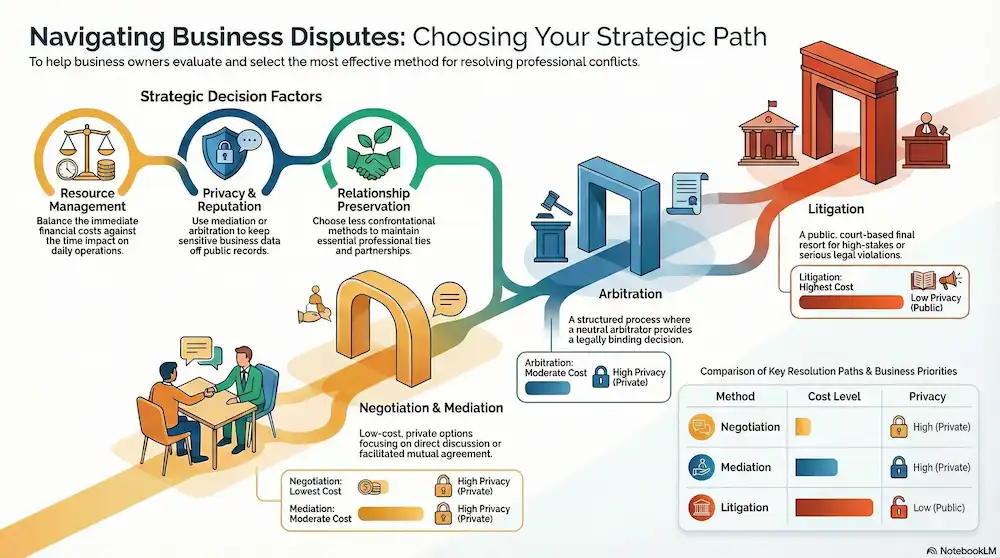
There are several ways to resolve business disputes, and each comes with its own advantages depending on the situation. Selecting the right method depends on your priorities, such as cost, time, and preserving relationships.
Negotiation is often the simplest and most practical approach. It involves direct discussions between parties to reach a mutually acceptable solution. This method works well when both sides are open to compromise and want to maintain a professional relationship. It is also the least expensive option and can often resolve issues quickly without outside involvement.
Mediation is another effective option when communication becomes difficult. A neutral third party helps facilitate discussion and guides both sides toward a resolution. Mediation is typically confidential and less formal than court proceedings, making it a preferred choice for businesses that want to avoid public disputes. You can learn more about how mediation works and its benefits through resources like https://www.adr.org/Mediation
Arbitration offers a more structured process. In this method, an arbitrator reviews the case and makes a decision, which may be legally binding. Arbitration is faster than litigation and provides a clear resolution, especially in disputes involving contracts where arbitration clauses are already included.
Litigation, or taking the dispute to court, is usually the final option. While it provides a legally enforceable outcome, it is often time-consuming, expensive, and public. However, it may be necessary when the dispute involves significant financial stakes or serious legal violations. For a deeper understanding of how business cases are handled in court, you can visit https://www.uscourts.gov/about-federal-courts/types-cases/business-cases
Key Factors to Consider When Choosing a Resolution Path
Choosing the right dispute resolution strategy requires careful evaluation of your situation. Not every method fits every conflict, so it is important to weigh your options thoughtfully.
One of the most important considerations is cost. Negotiation and mediation are generally more affordable, while arbitration and litigation can involve higher fees. Time is another critical factor, especially if the dispute is affecting your daily operations or cash flow.
Confidentiality may also play a significant role, particularly if sensitive business information is involved. Methods like mediation and arbitration help keep matters private, whereas court cases are often part of the public record. Additionally, consider how the dispute may impact your relationship with the other party. If maintaining the relationship is important, less confrontational methods are usually more appropriate.
The Role of Legal Guidance
Even if you aim to resolve your dispute without going to court, seeking legal advice early can be a smart move. A legal professional can help you understand your rights, interpret contracts, and identify potential risks before they become bigger problems.
Legal guidance is especially valuable when dealing with complex agreements or high-value disputes. It ensures that any resolution you reach is fair, enforceable, and aligned with your business interests. Having expert input can also give you confidence during negotiations and help you avoid costly mistakes.
Preventing Future Business Disputes
While resolving disputes is important, prevention should always be a priority. Many business conflicts can be avoided through clear communication and proper planning. Establishing strong foundations within your business relationships reduces the likelihood of misunderstandings.
Focus on creating detailed contracts that clearly outline expectations, responsibilities, and dispute resolution procedures. Maintain accurate records of communications and transactions, as these can be crucial if disagreements arise. Address small issues early before they escalate into major conflicts, and encourage open communication within your business environment.

Building a Strategic Approach to Dispute Resolution
A proactive approach to handling disputes can save your business time and resources in the long run. Instead of reacting to problems as they occur, develop a clear strategy for managing conflicts.
This may include setting internal guidelines for dispute resolution, training your team in communication and conflict management, and including mediation or arbitration clauses in your contracts. Being prepared allows you to respond quickly and effectively when disputes arise, reducing stress and uncertainty.
Take Action to Resolve Your Business Dispute Today
Don’t let a business dispute disrupt your operations or damage your reputation. Taking the right action early can save you time, money, and unnecessary stress. Whether you’re dealing with a contract issue, partnership conflict, or customer disagreement, choosing the right resolution strategy makes all the difference.
Reach out to a qualified business dispute professional today to assess your situation, explore your options, and guide you toward the best outcome. The sooner you act, the sooner you can protect your business and move forward with confidence.